The Denim Classic: An Exhaustive Study of the 30cm Top-Handle Bag in Togo Leather, Blue Jean, and Silver Hardware
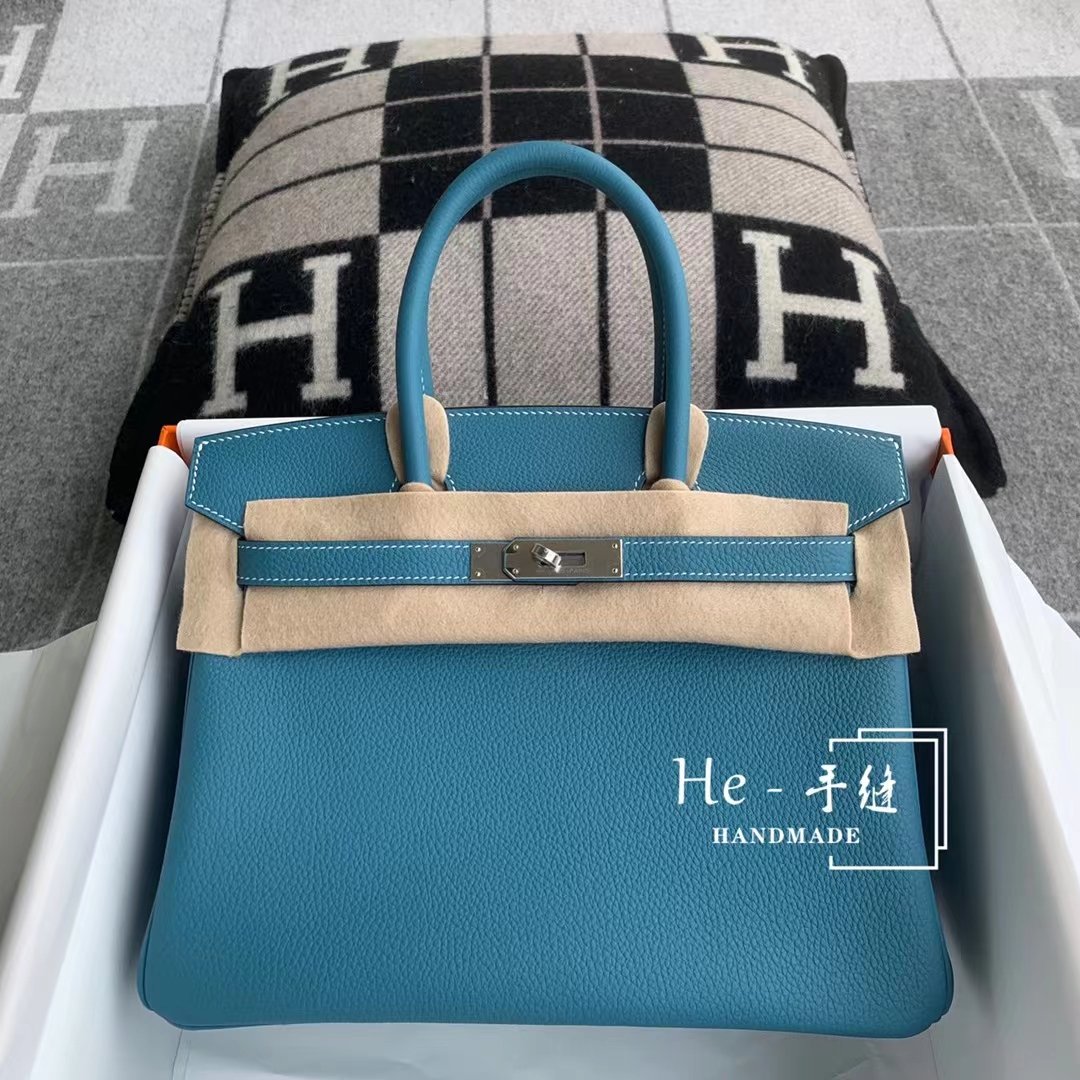
In the world of luxury handbags, there is a particular category of piece that exists at the intersection of practicality and sophistication—a piece that proves that true luxury is not always about delicacy and miniaturization, but sometimes about the confident embrace of space, utility, and the quiet beauty of a color drawn from the everyday. The 30cm Top-Handle Bag in Togo Leather, Blue Jean, and Silver Hardware belongs firmly to this category. It is not merely a bag; it is a companion—a large, structured, beautifully made object that is as comfortable in a city boardroom as it is on a weekend away, as appropriate for a day of errands as it is for a formal lunch.
Blue Jean translates from the French as "denim blue." It is a color named not for a pigment but for a fabric—the sturdy cotton twill that has been worn by workers, cowboys, and style icons for over a century. Blue Jean is a color that feels casual, approachable, and effortlessly chic—a medium, slightly faded blue with subtle grey and indigo undertones that give it extraordinary depth and versatility. It is the color of a well-worn pair of jeans, of a chambray shirt, of the sky on a clear summer day, of the deep waters of the Mediterranean.
And when rendered in Togo leather—a supple, grained calfskin that is prized for its durability and its distinctive texture—and paired with cool silver hardware, it becomes something truly extraordinary: a bag that is at once casual and refined, classic and modern, a piece of art that happens to be a handbag.
This article examines every dimension of the piece—its silhouette, its material, its color, its hardware, its styling potential, its investment profile, and the rituals of care it demands.
Part One: The Silhouette — The 30cm Top-Handle Bag
The Architecture of Formality
The top-handle bag is the most formal silhouette in the handbag canon. It descends from a lineage of structured, ladylike accessories that defined mid-twentieth-century elegance—the era of gloves, hatpins, and the deliberate gesture of setting a bag down on a restaurant table. Unlike the slouchy hobo, the utilitarian tote, or the casual crossbody, the top-handle bag is architectural. It has a rigid body, a reinforced frame, a single arched handle, and a flap closure topped with a signature clasp. It does not conform to the body; it stands apart from it, a small monument to order and precision.
The 30cm dimension is a generous size—a bag that is designed to hold a significant amount:
Large enough to accommodate a laptop (in some cases), a tablet, a full-size wallet, a makeup bag, a water bottle, a set of keys, a pair of sunglasses, and a scarf.
Small enough to be carried comfortably in the hand or in the crook of the arm, and to feel manageable.
The 30cm size is particularly appealing because it offers the best of both worlds: the practicality of a tote, with the elegance and formality of a top-handle design. It is a size that feels generous and accommodating—a bag that is ready for whatever the day brings.
Structural Integrity in Togo
Togo leather is a supple, grained calfskin that is prized for its durability and its distinctive texture. Unlike the stiff, structured leathers used in some top-handle bags, Togo is soft and pliable—it drapes beautifully and feels luxurious to the touch. However, this suppleness presents unique engineering challenges for a structured bag.
The artisan must construct the bag around an internal frame—typically layers of leather board reinforced with stitching and sometimes metal—to ensure the bag holds its shape through decades of use. The handle is a particular point of interest. On a 30cm bag, the handle is proportionally larger than on a smaller bag, and it must be attached with extraordinary precision. The attachments (often called "handle loops" or "chapes") are stitched by hand, and the stitching must be perfectly even, because the eye is drawn naturally to the handle as the bag's focal point.
The Posture of the Bag
There is a reason the top-handle bag is associated with formal occasions and professional settings. It dictates a posture. You cannot sling it across your body; you cannot let it hang casually from your shoulder. You must carry it—in your hand or in the crook of your arm—and in doing so, you must stand upright, shoulders back, chin up. The bag is a subtle choreographer of the body, and the 30cm size makes this choreography feel commanding rather than affected.
Part Two: The Material — Togo Leather
The Origins of Togo
Togo leather is one of the most beloved and versatile materials in the world of luxury handbags. It is a type of grained calfskin that is prized for its suppleness, its texture, and its durability.
Togo leather is produced by several tanneries, but the most famous—and the most closely associated with luxury houses—are the French and Italian tanneries that supply the great maisons. The leather is made from the finest calfskins, which are selected for their uniformity, suppleness, and lack of imperfections. The skins are then tanned and finished using a process that preserves the natural grain of the leather while giving it a soft, pebbled surface.
The Characteristics of Togo
Togo leather is prized for several reasons:
Suppleness: Togo is one of the softest and most pliable leathers in the luxury market. It drapes beautifully and feels luxurious to the touch. This suppleness makes it ideal for bags that are intended to be carried close to the body.
Grain: Togo has a distinctive, slightly pebbled grain that gives it a natural, organic appearance. The grain is not embossed or stamped; it is the natural grain of the calfskin, which means that every Togo bag is unique.
Durability: Despite its suppleness, Togo is highly durable. The leather is resistant to scratches and wear, and it develops a beautiful patina over time.
Weight: Togo is relatively lightweight, which makes it an excellent choice for a bag that is intended to be carried regularly.
Aging: Togo develops a beautiful patina over time. The leather softens with handling and takes on a subtle sheen, giving the bag a lived-in quality that many collectors find deeply appealing.
The Togo Advantage
Why choose Togo over other leathers? The answer lies in its combination of suppleness, durability, and beauty. Togo is a leather that is designed to be used—not just admired. It is resistant to the rigors of daily life, yet it retains the elegance and refinement that are the hallmarks of true luxury. It is, in short, the perfect leather for a bag that is intended to be carried every day for decades.
Part Three: The Color — Blue Jean
The Poetry of Denim Blue
Blue Jean translates from the French as "denim blue." It is a color named not for a pigment but for a fabric—the sturdy cotton twill that has been worn by workers, cowboys, and style icons for over a century.
Blue Jean is not a simple blue. It is a blue with depth and complexity—a medium, slightly faded blue with subtle grey and indigo undertones that give it extraordinary richness and versatility. It is the color of:
A well-worn pair of jeans, faded to perfection.
A chambray shirt, soft and comfortable.
The sky on a clear summer day.
The deep waters of the Mediterranean.
A piece of denim, worn smooth by time.
The Chromatic Complexity
Blue Jean is not a flat, uniform color. It is a living color that shifts and changes depending on the light:
In bright daylight, Blue Jean reads as a medium, slightly faded blue—almost chambray in its lightness, with the grey undertones becoming more visible.
In indoor lighting, it takes on a slightly deeper, more complex tone, with the indigo undertones coming to the fore.
In dim or evening light, it becomes a rich, almost navy blue—mysterious, sophisticated, and deeply elegant.
This chromatic complexity is what makes Blue Jean so compelling. It is not a color that can be captured accurately in a photograph; it must be seen in person, in motion, in different lighting conditions, to be fully appreciated.
The Psychology of Blue Jean
Blue is the most universally beloved color in the world. It is the color of the sky, of the sea, of calm and tranquility. It is also the color of trust, of loyalty, of intelligence. In the context of luxury goods, blue is a "quiet" color—less flashy than red, less expected than black, but equally sophisticated.
Blue Jean, in particular, has associations with ease and approachability. It is a color that suggests a certain kind of woman—one who is relaxed, confident, and effortlessly chic. It is the color of someone who understands that true style is not about being noticed, but about being remembered.
The Togo Effect
When rendered in Togo leather, Blue Jean achieves a depth and richness that is impossible to replicate in smooth calfskin. The natural grain of the leather creates a subtle play of light and shadow—a natural chiaroscuro—that gives the color a three-dimensional quality. The bag appears to glow from within, as if the blue were emanating from the leather itself rather than sitting on its surface.
The matte finish of Togo is particularly important for this color. A glossy finish would reflect light and make the Blue Jean appear flatter and more uniform. The matte finish absorbs light, allowing the natural depth of the color to shine through.
Part Four: The Hardware — Silver
The Case for Cool Tones
The choice of silver hardware (typically palladium or a high-grade silver-tone alloy) is a deliberate stylistic decision that shapes the entire character of the bag.
Blue Jean is a cool-toned blue, and silver is a cool-toned metal. Together, they create a harmonious, crisp composition that feels deeply satisfying. The silver hardware picks up the cool undertones of the Blue Jean and amplifies them, creating a bag that feels fresh, modern, and refined. It is the combination of denim and silver, of sky and steel, of the casual and the precise.
The Contrast: Silver against Blue Jean is a study in tonal harmony. The mirror-like polish of the hardware provides a brilliant flash that contrasts gently with the medium, matte blue of the leather. This contrast draws the eye to the bag's functional elements—the clasp, the feet, the handle attachments—and highlights the engineering behind the beauty.
The Finish: Luxury houses typically use palladium for their silver-tone hardware. Palladium is a rare, durable metal that resists tarnishing and maintains its luster for decades. The hardware is usually finished to a high polish, though some houses offer brushed or satin finishes for a more understated look.
The Details: On a 30cm top-handle bag, the hardware is proportionally prominent, which means every piece must be perfect. The clasp—whether a turn-lock, a push-lock, or a signature closure—is the bag's "jewel," and it must function flawlessly while looking exquisite. The feet on the base of the bag protect the leather from wear and add a subtle gleam when the bag is set down. The handle attachments must be strong enough to support the bag's weight while remaining elegant and unobtrusive.
Silver vs. Gold: A Question of Temperature
Why choose silver over gold? The answer lies in the character of the bag.
Gold hardware on a Blue Jean bag would create a warm, rich contrast—a classic combination that evokes the blue and gold of a Renaissance painting, the warmth of candlelight, the richness of old money. It would be beautiful, but it would also be somewhat unexpected.
Silver hardware, by contrast, creates a cool, crisp contrast. It provides a modern, architectural counterpoint to the denim blue, creating a bag that feels fresh, contemporary, and refined. It is the hardware of the modernist, the minimalist, the one who understands that true luxury is not about warmth but about precision.
Part Five: Styling and Versatility
Daywear
The 30cm Blue Jean Togo top-handle bag is remarkably versatile for daywear. Its medium, versatile color makes it a natural companion to almost any outfit:
A white shirt and blue denim for a smart-casual weekend look. The Blue Jean provides a tonal accent against the classic white and blue, while the silver hardware adds a touch of sparkle.
A navy blazer and cream trousers for a business-casual look. The Blue Jean provides a harmonious contrast to the navy, while the silver hardware keeps the look polished.
A grey suit for a business meeting. The Blue Jean provides a subtle pop of color against the grey, while the silver hardware keeps the look professional.
An all-white outfit for a summer day. The Blue Jean adds a touch of color and ease, while the silver hardware provides a touch of contrast.
Evening
For evening, the bag is equally at home:
A little black dress becomes something extraordinary when paired with a Blue Jean bag. The medium blue provides a sophisticated contrast to the black, while the silver hardware adds a touch of sparkle.
A navy or grey gown for a gala. The Blue Jean complements both beautifully, creating a cool, elegant palette.
A white tuxedo jacket and navy trousers for a black-tie event. The bag adds a touch of femininity and color to a menswear-inspired look.
The "Large Bag" Effect
The 30cm size makes this bag particularly well-suited to certain styling contexts. It is a bag that is designed to be carried in the hand or in the crook of the arm, which means it pairs beautifully with outfits that are themselves tailored and refined—a suit, a coat, a simple dress. It is a bag that carries a certain authority—a bag for the woman who is in charge, who is on her way to somewhere important.
Seasonal Considerations
Blue Jean is a true four-season color. In spring, it pairs beautifully with pastels and light linens. In summer, it provides a cool, refreshing contrast to white and bright colors. In autumn, it harmonizes with camel, rust, and olive. In winter, it provides a sophisticated contrast to dark wool and cashmere.
Part Six: The Investment Value
Supply and Demand
Togo leather bags are produced in larger quantities than exotic skin bags, but they are still subject to the limited supply and high demand that characterize the luxury market. The craftsmanship required to produce a top-handle bag in Togo is time-consuming and expensive, and the leather itself is sourced from a limited number of high-quality tanneries.
The Classic Configuration
The combination of a generous size (30cm), a versatile, universally flattering color (Blue Jean), and cool hardware (silver) makes this a highly desirable configuration on the secondary market. Unlike trendy "It bags" that lose value quickly, a top-handle bag in Togo leather is designed to be a lifelong companion—and often retains its value well, particularly in classic colors like Blue Jean.
The Neutral Premium
Blue Jean functions as a neutral in the wardrobe—it pairs with almost everything, from black and white to camel and grey. This versatility makes it particularly desirable on the secondary market, where buyers are looking for bags that can be worn with a wide range of outfits.
The Togo Advantage
Togo leather is particularly desirable on the secondary market because of its durability and its ability to age beautifully. A well-cared-for Togo bag can look almost new after years of use, which makes it an attractive option for buyers who want a pre-owned bag that still looks pristine. This durability, combined with the timeless appeal of the top-handle silhouette, ensures that a Togo bag retains its value better than many other leather bags.
The Heirloom Factor
Perhaps the most important aspect of the bag's value is its heirloom quality. A well-cared-for Togo bag can last generations. It develops a patina that tells the story of its use—the leather softening with handling, the hardware developing a gentle gleam—and this patina is part of its charm. Unlike a trendy bag that feels dated after a few seasons, a top-handle bag in Togo leather becomes more beautiful with age.
Part Seven: Care and Maintenance
Owning a Togo bag with silver hardware requires a commitment to care:
Storage: Store the bag in its dust bag, stuffed with acid-free tissue to maintain its shape. Keep it in a cool, dry place, away from direct sunlight. Never hang it by the handle.
Moisture: Togo leather is vulnerable to water stains. If caught in the rain, blot immediately with a soft, dry cloth. Do not rub.
Handling: Always carry the bag with clean hands. Avoid contact with lotions, perfumes, and hand sanitizers, which can stain the leather.
Cleaning: Wipe the leather gently with a soft, dry cloth to remove dust and dirt. Avoid using harsh chemicals or abrasive cleaners, which can damage the grain.
Conditioning: Use a specialist leather conditioner a few times a year to prevent the leather from drying out. Avoid silicone-based products, which can clog the pores of the leather.
Hardware Care: Silver-tone hardware can tarnish over time, particularly if exposed to moisture or chemicals. Wipe the hardware gently with a soft, dry cloth after use to remove fingerprints and oils. Avoid using abrasive polishes, which can scratch the surface.
Professional Care: For deep cleaning or repair, consult the maison or a trusted leather specialist. Do not attempt to clean the bag with household products.
- Help and Support
Conclusion: The Denim Classic
The 30cm Top-Handle Bag in Togo Leather, Blue Jean, and Silver Hardware is a masterclass in versatile, understated luxury. It is a bag that rewards the owner who appreciates the subtle nuances of texture and color—who understands that true luxury is not about logos or flashy embellishments, but about the quality of materials, the precision of craftsmanship, and the emotional resonance of a beautifully made object.
It is a piece for the woman (or man) who understands that style is not about being seen, but about how it makes you feel—confident, relaxed, and carrying a piece of art in the palm of their hand. Whether it becomes a daily companion or a treasured weekend piece, this bag is destined to be an heirloom, passing down not just as a financial asset, but as a testament to timeless style.
In a world of fleeting trends and disposable fashion, the Blue Jean Togo top-handle bag stands as a reminder that some things are worth waiting for, worth investing in, and worth keeping forever. It is, quite simply, the denim classic—and the denim classic, by its nature, endures.


Comments
Post a Comment