The Pinnacle of Rarity: A Deep Dive into the Top-Handle Bag 35cm in Crocodile, Himalaya, with Gold Hardware
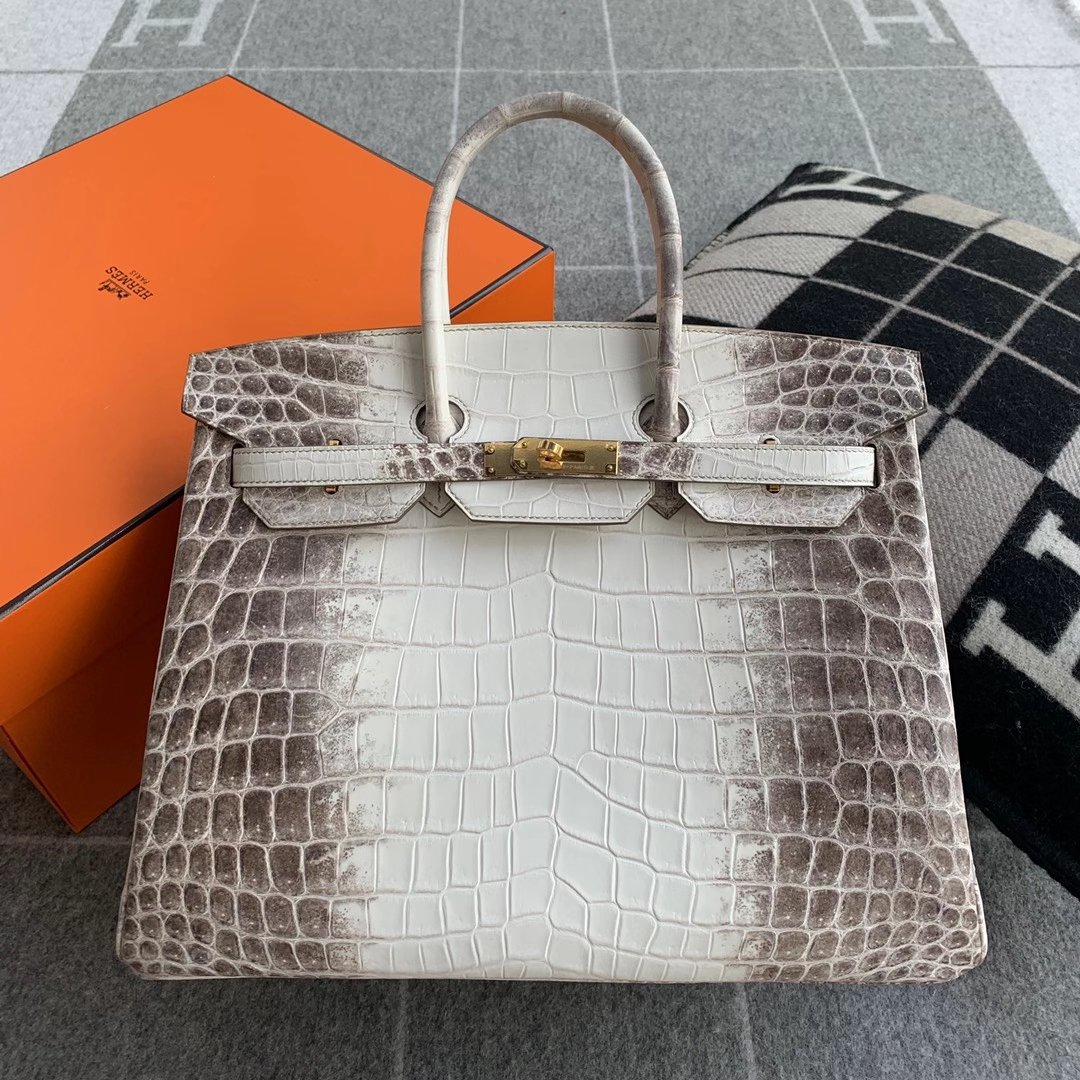
There are luxury bags, and then there are legendary luxury bags—pieces so rare, so difficult to produce, and so universally coveted that they transcend the category of "accessory" and become artifacts. The Top-Handle Bag 35cm in Crocodile, Himalaya, with Gold hardware belongs firmly to this rarefied tier. It is not merely a bag; it is the holy grail of the handbag world, a piece whose very name—"Himalaya"—conjures images of snow-capped peaks, icy gradients, and the sublime beauty of nature's most unforgiving heights. Here is a comprehensive exploration of this extraordinary, almost mythical piece.
1. The Silhouette: Top-Handle Bag 35cm
The 35cm top-handle bag is the largest of the classic top-handle sizes—a structured flap bag with a rolled leather top handle, a signature turn-lock (or sangles) closure, and an optional shoulder strap. At 35cm, it is a substantial, authoritative bag:
Capacity: The 35cm is a true "workhorse" size. It comfortably holds a laptop (up to 13–14 inches), a full-size wallet, a planner, a makeup pouch, sunglasses, keys, and a water bottle. It is a bag for the office, for travel, for the woman who carries her life with her.
Proportions: The 35cm retains the classic top-handle silhouette—a rectangular body with a slightly rounded flap, a rolled top handle, and the signature closure. It is proportioned to be carried by hand or in the crook of the arm, though a shoulder strap (often detachable) offers hands-free convenience. It is a bag with presence—it does not disappear on the arm; it commands it.
Design Philosophy: The top-handle bag is the quintessential "ladylike" silhouette—formal, structured, and timeless. In the 35cm size, it becomes a statement of authority and capability. It is not a delicate bag; it is a bag for women who mean business.
2. The Material: Crocodile
Crocodile is the ultimate exotic skin—the most prestigious, the most expensive, and the most demanding of craftsmanship. In the context of a Himalaya bag, the crocodile is typically Niloticus (Nile crocodile), prized for its large, rectangular belly scales and its ability to absorb and display the intricate Himalaya gradient.
The Scales: Crocodile skin is characterized by its distinctive scale pattern: large, rectangular scales on the belly and flanks, transitioning to smaller, rounder scales toward the edges. The scales are arranged in a symmetrical, almost geometric pattern, giving the bag a structured, architectural beauty. On a Himalaya bag, the scales act as a canvas for the gradient dye—each scale catches the light differently, creating a shimmering, three-dimensional effect.
The Hand: Crocodile is firm and structured, yet supple. It holds its shape beautifully, which is essential for the 35cm top-handle silhouette. It is heavier than calfskin but lighter than alligator, and it develops a subtle patina over time.
Durability: Crocodile is durable but requires care. It should be kept away from rain, stored in a cool, dry place, and handled with clean hands. The scales can dry out over time if not properly conditioned, and the finish can scratch if exposed to sharp objects.
Care: Wipe with a soft, dry cloth after use. Avoid water-based cleaners, which can damage the finish. Store in the dust bag, stuffed with tissue paper, away from direct sunlight (which can fade the color and dry the scales). Professional conditioning by a leather specialist is recommended every few years.
The "Exotic" Factor: Crocodile is the most prestigious of the exotic skins—associated with heritage, craftsmanship, and the highest echelons of luxury. A bag in crocodile is not just a bag; it is a piece of artisanal artistry.
3. The Color: Himalaya
Himalaya is not a single color—it is a gradient, a meticulous ombré that transitions from a snowy, milky white at the top of the bag to a deep, smoky grey at the bottom, passing through subtle shades of pearl, taupe, and charcoal along the way. The effect is exactly that of a snow-capped mountain at dusk: pristine white peaks fading into shadowed valleys.
The Gradient: The Himalaya gradient is one of the most difficult and time-consuming dye processes in luxury leather goods. Each scale must be individually treated to achieve a seamless transition from light to dark. The result is a bag that appears to be lit from above—as if the top of the bag is catching the last light of the sun while the bottom rests in shadow.
The "Mountain" Effect: The Himalaya gradient evokes the natural world—snow-capped peaks, glacial ice, the sublime beauty of high altitudes. It is a color that feels both majestic and serene, powerful and delicate.
Rarity: The Himalaya is the rarest and most coveted color in the luxury canon. It is produced in extremely limited quantities—often only a handful per year—and is typically reserved for the most valued clients. It is not a color you can simply walk into a boutique and request; it is a color that must be "earned."
The "Holy Grail" Status: The Himalaya has achieved legendary status in the secondary market. It is the most expensive and most sought-after color, with prices often reaching six figures at auction. It is the ultimate "unicorn" piece—a bag that collectors dream of and few ever own.
4. The Hardware: Gold
Gold hardware on a Himalaya bag is a match of warm, heritage opulence.
The Warm Contrast: The Himalaya gradient is cool-toned—white, grey, and charcoal. Gold hardware provides a warm, golden contrast that prevents the bag from feeling too cold or clinical. The combination is balanced—cool leather, warm metal—and feels classic and timeless.
The Turn-Lock: The signature turn-lock closure (or sangles) is the centerpiece of the hardware. In gold, the closure is warm and luminous, acting as a metallic frame for the gradient crocodile beneath. The gold's reflective surface catches the light and draws the eye, emphasizing the bag's architectural design.
Durability: Gold-plated hardware is generally resistant to tarnishing, though it can develop micro-scratches over time. On an exotic bag of this rarity, the hardware is a focal point, and its durability is essential. The gold will remain warm and bright, providing a lasting contrast to the gradient leather.
The "Heritage" Edge: Gold hardware gives the bag a classic, heritage feel. It suits the majestic, elemental quality of the Himalaya—this is not a modern, industrial bag; it is a piece with a sense of history and tradition. It is the hardware equivalent of a crown jewel.
5. The Synergy: Why This Combination Works
The Top-Handle Bag 35cm in Crocodile, Himalaya, with Gold hardware is a masterpiece of rarity and elegance:
Gradient vs. Solid: The Himalaya gradient is a feat of dyeing artistry—a seamless transition from light to dark that is impossible to replicate in a solid color. It is a bag that invites close inspection, revealing new details with every glance.
Cool vs. Warm: The cool, snowy gradient of the Himalaya contrasts with the warm, golden glow of the hardware. The combination is balanced and harmonious—a "sun on snow" aesthetic.
Exotic vs. Formal: Crocodile is the ultimate exotic skin; the top-handle silhouette is the ultimate formal shape. The combination is the pinnacle of luxury—a bag that is both precious and polished.
Large vs. Statement: At 35cm, the bag is substantial—but the Himalaya gradient and the crocodile scales make it a statement piece. It is a bag that says, "I am rare, I am precious, and I am not to be overlooked."
Resale Value: The Himalaya is the most valuable color in the secondary market. A 35cm Himalaya with gold hardware is one of the most sought-after and expensive bags in the world. It is an investment that appreciates in value—a true "asset" bag.
6. Styling and Care
Styling: This bag is a "statement of rarity." It is not a bag for casual outings or everyday errands—it is a bag for occasions, for galas, for moments that call for the extraordinary. Wear it with a tailored suit, a floor-length gown, or a dramatic coat. It is a bag that should be the focal point—let it shine.
Care: Crocodile is delicate and requires meticulous care. Avoid water, rain, and humidity. Wipe with a soft, dry cloth after each use. Store in the dust bag, stuffed with tissue paper, away from direct sunlight. Do not use oil-based conditioners, which can darken the skin and clog the scales. Be mindful of sharp objects (keys, jewelry) that can scratch the surface. The bag should be handled with clean hands—oils and lotions can leave marks on the light-colored gradient. Professional conditioning by a leather specialist is recommended every few years.
The "First Mark" Anxiety: The Himalaya gradient is light-colored and delicate—the first scratch or water mark is inevitable and noticeable. Many owners recommend a "breaking-in" period where the bag is carried carefully until the owner is comfortable with its care. The bag is meant to be used, not stored—but it requires mindfulness.
7. The Investment
The Top-Handle Bag 35cm in Crocodile, Himalaya, with Gold hardware is not an entry-level purchase—it is not even a "collector's piece" in the ordinary sense. It is the collector's piece—the most rare, the most expensive, and the most coveted bag in the world. It is an investment in rarity itself. It is a bag that will not be seen on every arm, that will spark awe among those who recognize it, and that will hold its value in the secondary market better than almost any other luxury good. It is, quite simply, the pinnacle.Submit a Contact Form
Conclusion:
The Top-Handle Bag 35cm in Crocodile, Himalaya, with Gold hardware is the holy grail of the handbag world. It is a bag that combines the ancient, majestic artistry of crocodile skin with the sublime, snow-capped beauty of the Himalaya gradient and the warm, heritage glow of gold hardware. It is not for the shy or the subtle—it is for the connoisseur, the collector, and the lover of the rarest things. It is a bag that reminds us that luxury is not just about craftsmanship; it is about the poetry of materials, the language of color, and the sheer, breathtaking joy of owning something truly legendary.


Comments
Post a Comment