The Pinnacle of Rarity: A Deep Dive into the 25cm Top-Handle Bag in Crocodile, Himalaya, and Silver Hardware
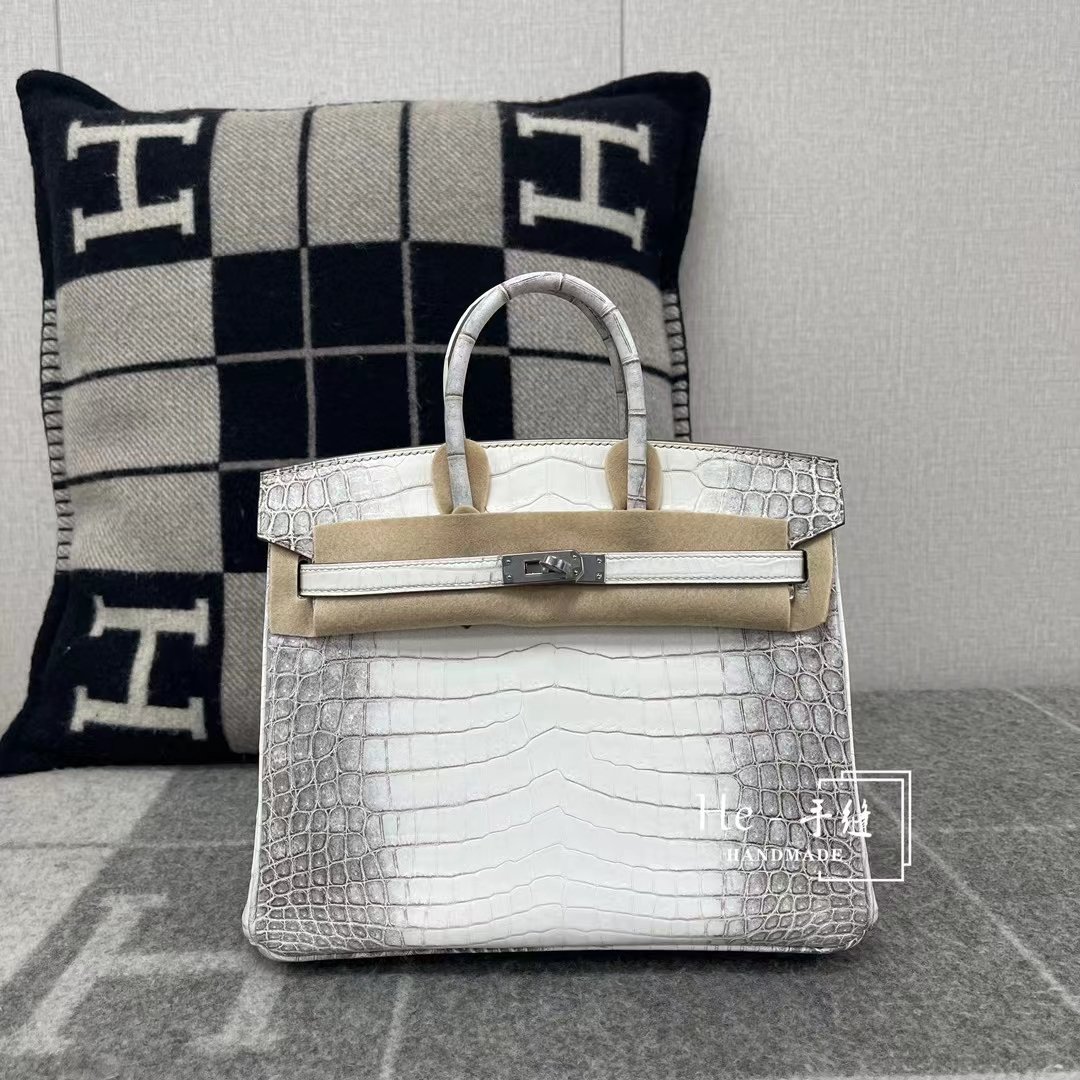
There are luxury handbags, and then there are legendary handbags. The 25cm Top-Handle Bag in Crocodile, Himalaya, and Silver Hardware belongs firmly to the latter category. This is not a piece one simply purchases; it is a piece one acquires—often after years of waiting, significant relationship-building with a maison, and a financial commitment that places it in the same conversation as fine jewelry and rare timepieces. The Himalaya is the most coveted colorway in the world of exotic leather, and its pairing with a structured 25cm top-handle silhouette and cool silver hardware creates a trifecta of rarity, craftsmanship, and aesthetic perfection.
Let us deconstruct this masterpiece element by element.
The Silhouette: The 25cm Top-Handle
The 25cm top-handle bag is the connoisseur's choice. It is the "goldilocks" proportion—substantial enough to hold life's essentials (a smartphone, a compact wallet, a lipstick, and perhaps a small mirror), yet diminutive enough to remain jewel-like and delicate in the hand.
Unlike larger totes or slouchy hobos, the top-handle bag is architectural. It features a rigid, reinforced body that maintains its shape through decades of use, a single arched handle designed to be carried in the crook of the arm or clasped elegantly in the palm, and a top flap with a signature clasp. The 25cm size dictates a certain posture from its carrier—upright, poised, deliberate. It is the antithesis of the casual crossbody; it is a bag that announces, quietly but unmistakably, that the wearer is going somewhere.
The structural integrity required to support the rigid body and handle in an exotic skin is immense. The artisans must reinforce the interior with layers of leather and board while ensuring the exterior remains supple enough to open and close smoothly. In a 25cm format, every millimeter counts, and the tolerances are exacting.
The Material: Crocodile
While alligator is prized for its wide, symmetrical scales, crocodile—specifically from the Porosus or Niloticus species—offers a different, arguably more sophisticated textural profile.
The Scale Pattern: Crocodile scales are typically smaller, more irregular, and closer together than alligator scales. They possess a distinct "pore" or "hair follicle" mark within each scale, a hallmark of authenticity and a detail that connoisseurs adore. The scales on the belly and flanks of a crocodile are prized for their symmetry and lack of scarring, while the back scales are harder and more armored. A master craftsman selects hides where the scale size transitions gracefully from the belly to the sides, ensuring visual harmony across the bag's surface.
The Tanning Process: Crocodile skins destined for the Himalaya treatment undergo an exceptionally gentle tanning and dyeing process. The goal is to preserve the natural luster of the scales while preparing the surface for the intricate color gradient. The leather is typically finished with a subtle sheen—not fully matte, not high-gloss, but a soft, natural polish that catches the light like moonlight on snow.
Durability and Patina: Crocodile is extraordinarily durable. The scales are nature's armor, resistant to scuffs and wear. Over time, the skin develops a rich patina, darkening slightly at the handle and corners, telling the story of its use. A well-cared-for crocodile bag can last generations, often outliving its original owner.
The Color: Himalaya
The Himalaya is not merely a color; it is a technical feat and a status symbol.
The Gradient: The Himalaya colorway is a masterful gradient that mimics the snowy peaks of the Himalayas. It transitions from a deep, smoky grey (or occasionally a rich cognac-brown) at the base and edges of the bag, melting into a pearlescent, snowy white at the center and top. The transition must be seamless, with no harsh lines—a testament to the skill of the artisan who applies the dye by hand.
The Technical Challenge: Achieving this gradient on exotic skin is extraordinarily difficult. The scales have varying porosity, meaning they absorb dye at different rates. The artisan must work swiftly and precisely, often using airbrushes and hand-blending techniques to ensure the color flows naturally across the irregular surface of the crocodile scales. The failure rate is high; only the most flawless hides and the most skilled hands can produce a Himalaya that meets the maison's standards.
Symbolism: The Himalaya represents purity, rarity, and the pinnacle of achievement. It is the "white whale" of handbag collecting. It is not a color one wears to blend in; it is a color one wears to signal a deep appreciation for the art of leather goods. It is the handbag equivalent of a Patek Philippe Grand Complication—a piece that says, "I have arrived, and I appreciate the finest things."
The Hardware: Silver
The choice of silver hardware (typically palladium or a high-grade silver-tone alloy) is a deliberate and brilliant stylistic decision.
Cool Counterpoint: The Himalaya gradient is already a study in cool tones—greys, whites, and icy pearls. Silver hardware harmonizes with this palette, enhancing the bag's ethereal, wintery quality. Gold hardware, while beautiful, would warm the bag up, potentially clashing with the cool gradient. Silver keeps the bag feeling crisp, modern, and almost glacial in its beauty.
The Finish: The hardware is typically finished to a high polish, providing a mirror-like flash that contrasts with the textured crocodile skin. The clasp, the feet, and the handle attachments gleam like ice crystals against the snowy gradient. It is a subtle but powerful detail that elevates the entire composition.
Durability: Palladium, often used by luxury houses for silver-tone hardware, is a rare and durable metal that resists tarnishing. It maintains its luster for decades, ensuring the bag's hardware remains as brilliant as the day it was purchased.
The Rarity and the "Game"
It is impossible to discuss the Himalaya without addressing its rarity. This is not a bag that is produced in abundance.
Sourcing: The hides required for a Himalaya must be nearly flawless. Any scarring, mosquito bites, or irregular scale patterns would disrupt the gradient and render the hide unsuitable. Only a tiny fraction of crocodile skins meet this standard.
Production: The hand-dyeing process is slow and labor-intensive. Each bag is unique, with slight variations in the gradient that make it a one-of-a-kind piece of art.
Allocation: Most luxury houses do not sell the Himalaya to walk-in clients. It is reserved for the maison's most loyal and significant clients—those who have demonstrated a long-term commitment to the brand. For many collectors, acquiring a Himalaya is the culmination of years of relationship-building. It is the ultimate "grail" piece, and its presence in a collection often signals that the owner is a serious connoisseur.
Styling and Versatility
The 25cm Himalaya is surprisingly versatile for such a rarefied piece.
Bridal: It is the ultimate bridal bag. It pairs beautifully with a white wedding gown, adding a touch of exotic luxury without competing with the dress.
Evening: For a black-tie gala, it provides a stunning contrast to a dark gown or tuxedo. The snowy white gradient catches the light, drawing the eye without being ostentatious.
High-Low Dressing: In the world of "quiet luxury," pairing a Himalaya with a simple cashmere turtleneck and tailored trousers is the ultimate flex. It says, "I don't need logos; the bag speaks for itself."
Seasonal: While its icy palette is perfect for winter, the Himalaya is a year-round piece. It provides a cool, refreshing contrast to summer linens and a cozy, luxurious touch to autumn cashmere.
The Investment Value
The Himalaya is one of the few handbags that consistently appreciates in value on the secondary market.
Supply and Demand: The supply is inherently limited by the availability of flawless hides and the capacity for hand-dyeing. Demand, however, is global and insatiable. This imbalance ensures that prices remain high.
Auction Performance: Himalaya bags regularly break records at auction houses like Sotheby's and Christie's. They are treated as collectibles, often fetching prices significantly above their original retail value.
A Tangible Asset: For collectors, the Himalaya is not just a bag; it is a store of value. It is a tangible asset that can be enjoyed, displayed, and eventually passed down or sold.
Care and Maintenance
Owning a Himalaya requires a level of care commensurate with its rarity.
Storage: Store in the provided dust bag, stuffed with acid-free tissue to maintain shape. Keep away from direct sunlight, which can fade the gradient and dry out the skin.
Moisture: Crocodile is more water-resistant than alligator, but the Himalaya dye can be sensitive to water. Avoid rain; if the bag gets wet, blot immediately with a soft, dry cloth.
Handling: The light-colored gradient shows dirt and oils more readily than darker bags. Always carry the bag with clean hands, and avoid contact with lotions, perfumes, and hand sanitizers.
Professional Care: Periodic professional conditioning by the maison or a trusted exotic leather specialist is recommended to keep the skin supple and the gradient vibrant.
- Contact Details
Conclusion
The 25cm Top-Handle Bag in Crocodile, Himalaya, and Silver Hardware is the ne plus ultra of luxury handbags. It is a convergence of the rarest materials, the most exacting craftsmanship, and the most coveted colorway in the world. It is a bag that is not merely owned, but stewarded—a piece of art that will be passed down through generations, its value and beauty only increasing with time.
For the collector who has everything, the Himalaya is the one piece that still inspires awe. It is the handbag that transcends fashion to become a legend. It is, quite simply, the grail.


Comments
Post a Comment